
Spanish 21 Blackjack: Rules, Strategy, Bonus Payouts and How to Play
Spanish 21 is a blackjack variation played with Spanish decks, meaning the four 10-spot cards are removed from each deck while jacks, queens and kings remain. Taking four ten-value cards out of every deck would normally help the house, so Spanish 21 gives the player a long list of favorable rules in return: player 21 usually wins automatically, blackjack beats dealer blackjack, doubling is flexible, surrender can be generous, and special 21 combinations can earn bonus payouts.
Usually six or eight 48-card Spanish decks.
A player total of 21 normally beats any dealer total.
Player blackjack commonly pays 3:2 and beats dealer blackjack.
Special 5-, 6- and 7-card 21s plus 6-7-8 and 7-7-7 combinations can pay extra.
What Is Spanish 21?
Spanish 21 is not simply standard blackjack with a different name. Its defining change is the deck: the four 10-spot cards are removed, leaving 48 cards, while jacks, queens and kings still count as ten. Most casino versions use six or eight Spanish decks.
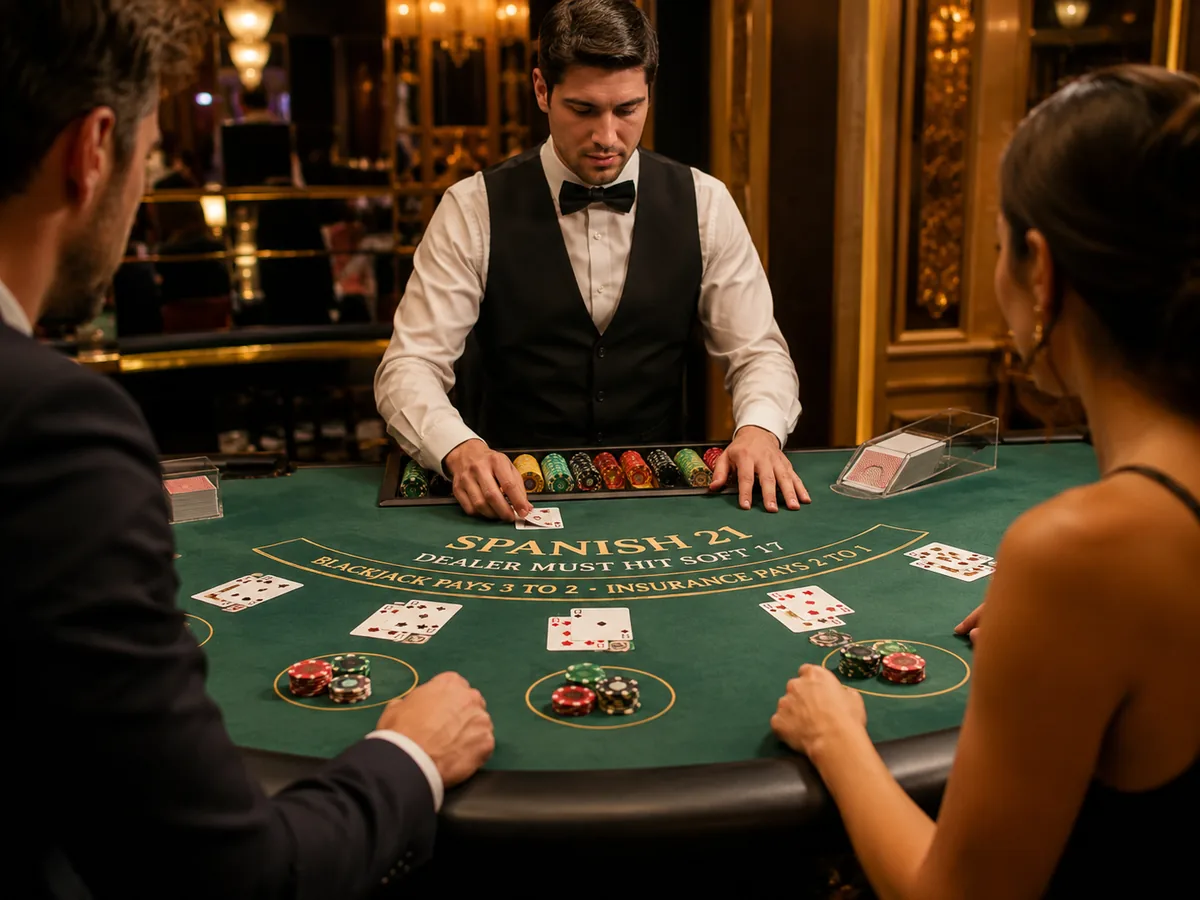
To compensate for the missing 10s, the game typically offers more generous player rules. Player 21 normally wins automatically, blackjack beats dealer blackjack, and many tables allow flexible doubling, surrender and double down rescue.
Spanish 21 Rules at a Glance
| Rule | Common Spanish 21 treatment |
|---|---|
| Deck composition | Six or eight 48-card Spanish decks, with the four 10-spot cards removed from each deck. |
| Player blackjack | Commonly pays 3:2 and beats a dealer blackjack. |
| Player total of 21 | Usually wins automatically instead of pushing against dealer 21. |
| Dealer soft 17 | May hit or stand depending on the casino. |
| Doubling | Often allowed on any number of cards and after splitting. |
| Redoubling | Available at some tables, sometimes up to a stated limit. |
| Surrender | Late surrender is common; some games also offer double down rescue. |
| Split aces | Resplitting and drawing additional cards may be allowed, depending on the table. |
| Bonus hands | Extra payouts can apply to 5-, 6- and 7+-card 21s and certain 6-7-8 / 7-7-7 hands. |
| Side bets | Match the Dealer is a common optional side wager. |
Always check the exact table rules before playing. Spanish 21 can vary more than many players expect. Whether the dealer hits soft 17, whether redoubling is allowed, whether split aces can be hit, and whether bonuses are paid after splits can all change the game’s mathematical return.
How to Play Spanish 21
- Place your wager. Put the main blackjack bet in the betting area. If a side bet such as Match the Dealer is offered, it is normally placed at the same time.
- Receive the initial cards. You receive two cards and the dealer receives an upcard plus a second card according to the house procedure.
- Check for blackjack. A two-card ace plus a ten-value face card is blackjack. Because the 10-spot cards are removed, natural blackjacks occur less often than in a standard deck.
- Choose your action. Depending on your total and the dealer card, you may hit, stand, split, double or surrender. Spanish 21 often offers more doubling flexibility than ordinary blackjack.
- Use bonus opportunities correctly. Some 21 totals qualify for special payouts, but doubling or splitting may cancel certain bonuses under the house rules.
- Dealer completes the hand. Once all players finish, the dealer draws according to the soft-17 rule and wagers are settled.
Spanish 21 Bonus Payouts
One of the best-known features of Spanish 21 is the bonus schedule for particular hands totaling 21. The exact paytable can vary, but the following is a widely used structure. These bonuses generally require a non-doubled hand, and a casino may apply additional restrictions after splitting.
| Player hand totaling 21 | Common bonus payout |
|---|---|
| Five-card 21 | 3:2 |
| Six-card 21 | 2:1 |
| Seven or more cards totaling 21 | 3:1 |
| 6-7-8 or 7-7-7, mixed suits | 3:2 |
| 6-7-8 or 7-7-7, same suit | 2:1 |
| 6-7-8 or 7-7-7, all spades | 3:1 |
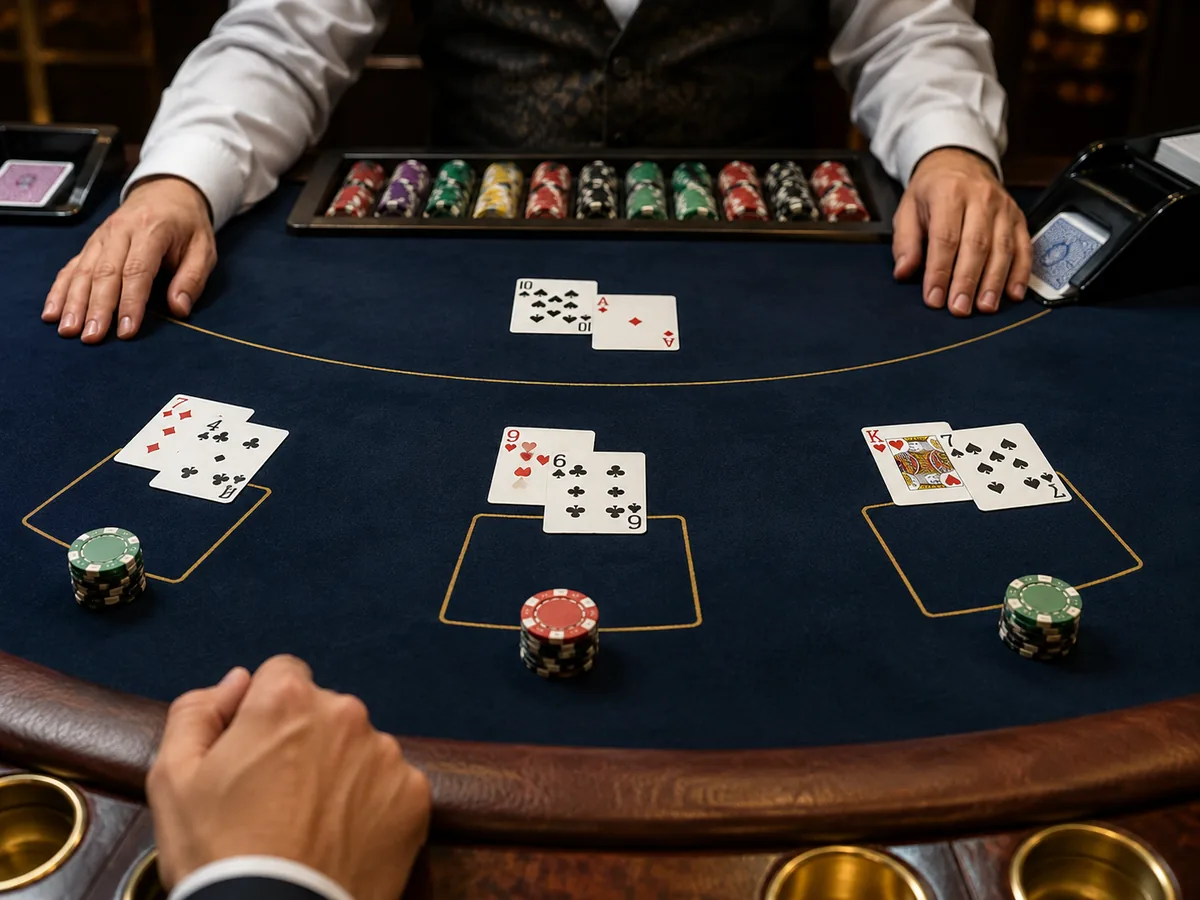
Some live Spanish 21 games also advertise a Super Bonus for a suited 7-7-7 when the dealer shows a 7. The prize can depend on the player’s wager and the casino’s published rules. Because it is a rare event, treat it as an occasional bonus rather than the reason to change otherwise correct strategy.
Spanish 21 Strategy Basics
Spanish 21 strategy still compares your hand with the dealer’s upcard, but the missing 10s and liberal player options change many decisions. A strategy chart made specifically for Spanish 21 is therefore essential.
- ✓Use a Spanish 21 chart. Basic strategy for standard blackjack is not interchangeable with Spanish 21 strategy.
- ✓Know the soft-17 rule. Strategy changes when the dealer hits soft 17 instead of standing.
- ✓Take advantage of flexible doubling. Some versions let you double on three or more cards, creating profitable opportunities that do not exist in regular blackjack.
- ✓Understand double down rescue. If the table offers it, you may be able to surrender after doubling and recover the doubled portion while forfeiting the original wager.
- ✓Do not chase bonus hands. Bonus payouts are useful when they occur naturally, but deliberately making poor hits just to pursue a rare combination can cost more than the bonus is worth.
Dealer Upcards and Pressure Points
Low dealer upcards are generally weaker, while 9, ten-value cards and aces put more pressure on the player. Because the Spanish shoe contains fewer ten-value cards, some multi-card hits differ from ordinary blackjack strategy.
Surrender and Double Down Rescue
Late surrender lets you give up a poor initial hand for half the wager after the dealer checks for blackjack. Where double down rescue is offered, you may also surrender after doubling, recovering the doubled portion while forfeiting the original bet.
Spanish 21 House Edge and RTP
The house edge depends on the exact rules and correct strategy. Commonly analyzed versions are around 0.40% when the dealer stands on soft 17, around 0.42% when the dealer hits soft 17 with redoubling, and around 0.76% when the dealer hits soft 17 without redoubling.
These are long-run mathematical figures, not predictions for a session. Compare the exact Spanish 21 paytable and rules rather than relying on the game name alone.
Spanish 21 vs. Standard Blackjack
| Feature | Spanish 21 | Typical standard blackjack |
|---|---|---|
| Deck | 48-card Spanish deck; 10 spots removed | Regular 52-card deck |
| Natural blackjack | Usually 3:2 and beats dealer blackjack | Often 3:2; pushes dealer blackjack |
| Player 21 | Usually wins automatically | Can push dealer 21 |
| Doubling | Often allowed on any number of cards | Usually limited to the first two cards |
| Double after split | Common | Depends on house rules |
| Resplit aces | Often allowed | Frequently restricted |
| Bonus payouts | Common for selected 21 hands | Usually none beyond blackjack |
| Strategy | Requires a Spanish 21-specific chart | Uses standard blackjack basic strategy for the table rules |
Removing the 10s is the major disadvantage, while the liberal rules and bonuses give value back to the player. That tradeoff is why correct Spanish 21 strategy matters.
Match the Dealer Side Bet
Match the Dealer is an optional side bet that pays when one or both of your first two cards match the dealer’s upcard by rank, with a larger payout for a suited match. Paytables vary, and side bets usually carry a higher house edge than the main game.
Spanish 21 FAQ
Why is Spanish 21 called “Spanish” blackjack?
The game uses Spanish-style decks with the four 10-spot cards removed. Jacks, queens and kings remain and still count as ten.
Does Spanish 21 use jokers?
No. A standard Spanish 21 casino shoe uses 48-card decks created by removing the four 10-spot cards from ordinary decks.
Does a player 21 beat dealer 21?
Under common Spanish 21 rules, yes. A player total of 21 wins automatically, and a player blackjack also beats a dealer blackjack.
What is double down rescue?
Where offered, it lets a player surrender after doubling. The doubled portion is returned and the original wager is forfeited.
Is Spanish 21 better than regular blackjack?
Neither game is automatically better. The answer depends on the exact rules, payouts and strategy. Spanish 21 removes the 10 spots but compensates with unusually favorable player options and bonuses.
Final Takeaway
Spanish 21 combines a weaker deck composition with unusually strong player options. Use the correct chart for the table’s soft-17 rule, understand surrender and double down rescue, and check redoubling and bonus conditions before playing. For more variations, compare Double Attack Blackjack, Blackjack Switch and Pontoon.